
The History of Thomas Guide Online Maps
Digital preservation efforts now offer access to scanned Thomas Guides via online archives, including the Internet Archive, ensuring these maps remain available.
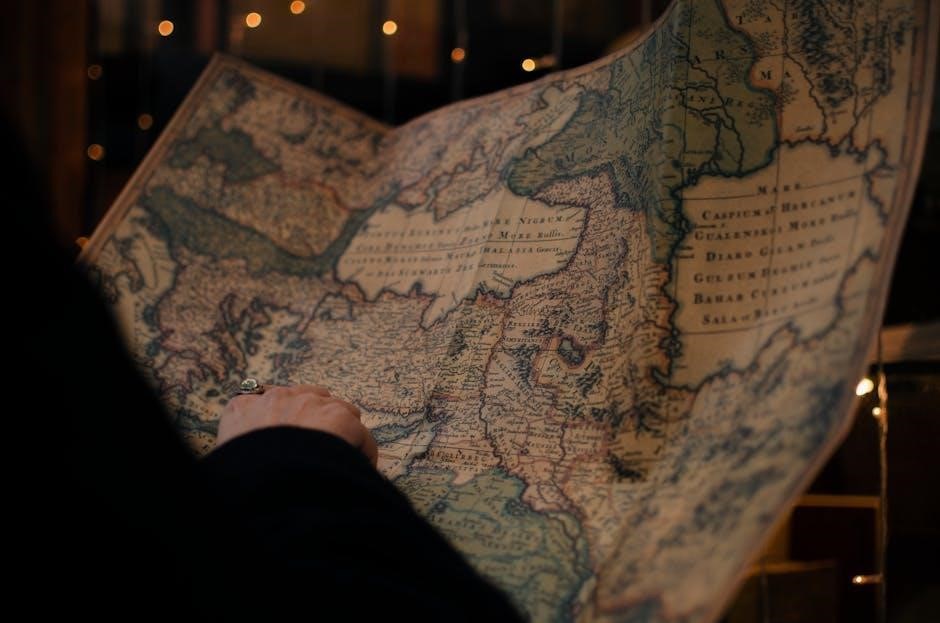
Early Thomas Bros. Maps & Publications
Thomas Bros. Maps began with a focus on detailed cartography, initially publishing a blend of block maps, captivating birds-eye views of communities, and generalized tourist maps. This early work established a foundation built upon accuracy, granularity, and user-friendliness – qualities that would become synonymous with the Thomas Guide.
These initial publications weren’t simply navigational tools; they offered a visual record of burgeoning cities and towns. The commitment to detail quickly distinguished Thomas Bros. from competitors, attracting a loyal following among motorists and residents alike. The company’s dedication to providing comprehensive and reliable maps laid the groundwork for the later, iconic ring-bound guides.
Even before the digital age, the seeds of accessibility were sown, as the Los Angeles Central Library began collecting these guides, recognizing their historical and practical value. This foresight would later prove crucial in preserving these maps for future generations, even as technology shifted.
The Rise of Detailed Block Maps
The defining characteristic of the Thomas Guide became its incredibly detailed block maps. Unlike earlier, more generalized maps, these provided street-level precision, showing every building and intersection. This granularity proved invaluable for navigating complex urban landscapes, particularly in rapidly growing cities like Los Angeles.
The popularity of these detailed maps surged as automobile ownership increased. Motorists relied on the Thomas Guide to efficiently navigate unfamiliar areas, and businesses utilized them for deliveries and service calls. The guides weren’t just for drivers; they became essential tools for city planners, emergency services, and even investigators.
The Los Angeles Central Library’s complete collection highlights the importance placed on these maps. Frequent requests for photocopies of popular areas, like Hollywood and downtown, demonstrated their constant use and value to the public, foreshadowing their eventual digital preservation.
Focus on Accuracy and User-Friendliness
Thomas Bros. Maps distinguished themselves through an unwavering commitment to accuracy. Cartographers meticulously verified every street, building, and landmark, ensuring the guides reflected the ever-changing urban environment. This dedication built immense trust with users who depended on the maps for reliable navigation.

Beyond accuracy, the Thomas Guide prioritized user-friendliness. The ring-bound format allowed maps to lay flat and withstand frequent use. Clear, consistent symbology and indexing made it easy to locate specific destinations. These features weren’t merely conveniences; they were integral to the guide’s practicality.
This emphasis on detail and usability quickly set them apart from competitors, establishing the Thomas Guide as the gold standard for urban mapping. The guides became synonymous with navigating Los Angeles and other major cities, a testament to their thoughtful design and meticulous execution.

The Transition to Digital: Challenges and Changes
Despite its extensive database, the Thomas Guide stumbled in the digital age, facing competition from GPS and traffic apps, leading to cost-cutting measures;
Impact of GPS and Traffic Apps
The advent of GPS technology and real-time traffic applications dramatically altered navigation, presenting a significant challenge to the Thomas Guide’s dominance. Previously, motorists relied heavily on the detailed, physical maps for route planning and location finding, a need the Thomas Guide expertly fulfilled for decades. However, the convenience and dynamic updates offered by digital navigation systems quickly gained popularity.
Specifically, the ease of use and turn-by-turn directions provided by GPS devices and smartphone apps diminished the necessity for constantly referencing a large, folded map. The ability to avoid congestion and discover alternative routes further solidified the shift towards digital solutions. This transition impacted the demand for traditional Thomas Guides, as drivers increasingly opted for the immediacy and efficiency of electronic navigation. The library even noted pages were torn out frequently, foreshadowing the shift.
Rand McNally’s Acquisition and Cost-Cutting Measures
Following Rand McNally’s acquisition of Thomas Bros. Maps, a period of significant change ensued, marked by strategic decisions impacting the future of the guide. Despite possessing a “huge database” of map information, the company struggled to successfully adapt to the burgeoning digital landscape. This resulted in a series of cost-cutting measures intended to streamline operations and maintain profitability in a rapidly evolving market.
These measures included the reduction of cartographer positions, a core element of the Thomas Guide’s historical strength – its meticulous map creation. The focus shifted away from the detailed, hand-crafted approach that had defined the guides for years. This downsizing, coupled with a perceived stumble in the digital transition, signaled a departure from the principles of accuracy and granularity that had initially set the Thomas Guide apart, ultimately impacting its relevance.
The Digital Age Stumble
The arrival of GPS technology and traffic-beating applications fundamentally altered navigation, presenting a formidable challenge to the Thomas Guide’s established dominance. While the guide boasted an extensive database, Rand McNally struggled to effectively translate its strengths into a competitive digital product; This inability to seamlessly transition into the digital realm proved to be a critical misstep.
The rise of readily available, free digital mapping solutions – offering real-time traffic updates and turn-by-turn directions – quickly eroded the Thomas Guide’s value proposition. Users increasingly favored the convenience and dynamic nature of these new technologies over the static, printed maps. Consequently, the Thomas Guide, once an indispensable tool for drivers, found itself increasingly sidelined, demonstrating a significant stumble in adapting to the demands of the digital age.

Accessing Free Thomas Guide Online Maps Today
Fortunately, digitized versions are accessible through online archives and digital collections, notably the Internet Archive, offering free access to scanned Thomas Guides.
Online Archives and Digital Collections
Numerous online platforms are dedicated to preserving and providing access to historical maps, and the Thomas Guide is increasingly represented within these digital collections. The Internet Archive stands out as a crucial resource, hosting a growing number of scanned Thomas Guides, allowing users to virtually browse these detailed maps from anywhere with an internet connection.
These archives aren’t simply static images; many offer zoom functionality, enabling detailed examination of streets, landmarks, and even the unique features embedded within the maps. Beyond the Internet Archive, various libraries and historical societies are actively digitizing their Thomas Guide holdings, contributing to a broader online availability.
Researchers, historians, and enthusiasts alike benefit from this expanding digital landscape, as it democratizes access to a valuable resource previously confined to physical collections like the Los Angeles Central Library. The ongoing digitization process ensures these maps will continue to be accessible for generations to come.
Internet Archive Resources
The Internet Archive serves as a pivotal hub for accessing freely available scanned Thomas Guides. Its collection encompasses guides from various years and locations, offering a remarkable historical record of urban development and cartographic detail. Users can navigate the archive using keywords like “Thomas Guide” combined with specific city or county names to refine their search.

Within the Internet Archive, these guides are often presented as downloadable PDFs or viewable through a browser-based reader. This allows for both convenient online browsing and offline access. The platform’s commitment to preserving digital information ensures the long-term availability of these valuable resources.
Furthermore, the Internet Archive’s open access policy means there are no subscription fees or restrictions on usage, making it an ideal resource for researchers, genealogists, and anyone interested in exploring the history of mapping and urban landscapes. It’s a cornerstone of free access to Thomas Guide materials.
Availability of Scanned Thomas Guides
Beyond the Internet Archive, numerous websites and digital collections now host scanned Thomas Guides, offering free access to these historical maps. Many local libraries and historical societies have undertaken digitization projects, making their collections available online. A focused web search using terms like “Thomas Guide digital” or “Thomas Guide online” reveals a growing number of resources.
These scanned guides vary in quality and completeness, but collectively they represent a significant effort to preserve and share this cartographic heritage. Some sites offer interactive versions, allowing users to zoom and pan across the maps, while others provide downloadable PDFs.
The increasing availability of these resources demonstrates a growing appreciation for the historical and cultural value of Thomas Guides, ensuring they remain accessible to future generations, even as digital mapping technologies continue to evolve.

Unique Features of Thomas Guides
Thomas Guides uniquely incorporated “trap streets” for copyright protection, and the Los Angeles Central Library holds a complete collection of these guides.
“Trap Streets” and Copyright Protection
Thomas Brothers employed a clever, albeit subtle, method of copyright protection by intentionally including fictitious streets – often dubbed “trap streets” – within their maps. These weren’t errors; they were deliberately inserted features designed to thwart unauthorized reproduction and resale of their meticulously crafted guides. The strategy aimed to catch those attempting to illegally copy and distribute the maps, as the presence of these non-existent streets would immediately reveal the infringement.
While not implemented on every single page, these deceptive elements were strategically placed throughout the guides, particularly in areas prone to frequent copying. A visit to the map room at the Los Angeles Central Library, specifically examining the older Thomas Guides from the family ownership era, offers a chance to identify some of these unique features. This innovative approach demonstrated a commitment to safeguarding their intellectual property in a pre-digital age, highlighting the value placed on the accuracy and detail within each map.
The Los Angeles Central Library Collection
The Los Angeles Central Library boasts a truly remarkable and historically significant asset: the only known complete collection of the iconic, rectangular, ring-bound Thomas Guides. This comprehensive archive represents a vital resource for researchers, historians, and anyone interested in the evolution of Los Angeles’ urban landscape. Recognizing the guides’ popularity, the library historically offered free photocopies of frequently requested sections, like Hollywood and downtown, acknowledging their frequent removal by motorists.

This dedication to preservation ensures these invaluable maps remain accessible for future generations. The collection provides a tangible link to a time before widespread GPS navigation, offering a unique perspective on how Angelenos navigated their city. Exploring this collection allows a deep dive into the detailed cartography and community views that defined the Thomas Guide experience.
Detailed Birds-Eye Views of Communities
Early Thomas Bros. Maps weren’t solely focused on street-level detail; they also included captivating birds-eye views of communities, offering a broader contextual understanding of Los Angeles and surrounding areas. These illustrations provided a visual representation of neighborhoods, landmarks, and the overall urban fabric, supplementing the precise block maps. This combination of detailed street grids and artistic renderings distinguished the Thomas Guide from other mapping publications of the time.
These views weren’t merely aesthetic additions; they served a practical purpose, helping users orient themselves and grasp the spatial relationships between different parts of the city. While accessing these original views online can be challenging, digitized versions within the Internet Archive and the Los Angeles Central Library collection offer glimpses into these historical perspectives.

Thomas Guide and Fraud Investigation
Auditing and forensic accounting utilized Thomas Guides for verifying addresses and locations, aiding in investigations related to financial statement fraud and compliance.
Auditing and Forensic Accounting Applications
Thomas Guides proved invaluable in auditing and forensic accounting, offering a tangible method to verify the physical existence of assets and locations reported in financial statements. Auditors leveraged the detailed street maps to confirm addresses of businesses and properties, reducing the risk of fictitious entities or overstated asset values. This verification process was particularly crucial when assessing accounts receivable and inventory.
Investigators utilized the guides to trace ownership and identify discrepancies in reported locations, aiding in the detection of fraudulent activities like shell companies or misrepresented collateral. The granularity of the maps, showing individual buildings and street details, allowed for a more thorough investigation than relying solely on address lists. Furthermore, the guides assisted in reconstructing events and establishing timelines in cases of embezzlement or asset misappropriation, providing a visual context to financial transactions.
Relevance to Sarbanes-Oxley Act (SAS99)
The Sarbanes-Oxley Act (SAS99) significantly heightened auditor responsibility for fraud detection, and Thomas Guides became a practical tool in meeting these increased demands. SAS99 required auditors to perform procedures specifically designed to identify material misstatements resulting from fraud, necessitating robust verification methods. The detailed maps facilitated the independent verification of asset locations and business operations, supporting compliance with the Act’s requirements.
By physically confirming the existence of reported assets, auditors could strengthen their assessment of internal controls and reduce the risk of undetected fraud. Thomas Guides provided a tangible, independent source of information, complementing traditional audit procedures. This visual confirmation was particularly valuable in industries prone to fictitious revenue or overstated asset valuations, bolstering the reliability of financial reporting and contributing to investor confidence.
Use in Detecting Financial Statement Fraud

Thomas Guides proved invaluable in uncovering financial statement fraud by enabling auditors to verify the physical existence and operational status of reported assets. Discrepancies between reported locations and actual sites, easily identified using the detailed maps, signaled potential fictitious assets or inflated valuations. This was crucial for detecting schemes involving phantom inventory, nonexistent property, or misrepresented business locations.
The maps aided in confirming the legitimacy of transactions by validating the addresses of vendors and customers, reducing the risk of fictitious sales or purchases. Auditors could cross-reference company records with the Thomas Guide’s granular detail, identifying inconsistencies that warranted further investigation. This spatial verification provided a powerful layer of scrutiny, enhancing the reliability of financial data and protecting stakeholders from fraudulent reporting practices.
