Shoulders are the cornerstone of a strong, athletic physique. This comprehensive guide delivers a full shoulder workout PDF, designed for men and women of all fitness levels, focusing on compound exercises and accessory moves. It ensures safety, progress, and optimal shoulder development, whether you’re a beginner or an advanced lifter.
1.1 What is a Full Shoulder Workout?
A full shoulder workout targets all three deltoid muscle groups—front, middle, and rear—along with the rotator cuff for comprehensive shoulder development. Designed for individuals of all fitness levels, these exercises emphasize strength, stability, and aesthetics, incorporating both compound and isolation movements for balanced shoulder growth.
1.2 Benefits of a Full Shoulder Workout
Full shoulder workouts enhance strength, stability, and aesthetics by targeting all shoulder muscles equally. Regular full shoulder workouts improve posture, prevent injuries, and boost overall upper body power. They also create a balanced, symmetrical physique and help achieve significant muscle definition. This workout PDF provides practical tips for maximizing shoulder development through compound exercises and accessory movements, ensuring optimal results for all fitness levels.
The Importance of Shoulder Workouts
Shoulder workouts are essential for building strength, stability, and symmetry in the upper body. Regular shoulder exercises improve posture, functional movement, and overall aesthetics. A strong shoulder foundation enhances athletic performance and daily activities. This full shoulder workout PDF ensures comprehensive shoulder development, catering to diverse fitness goals and preferences.
2.1 Building Shoulder Muscle Mass
To build shoulder muscle mass, focus on compound exercises like overhead presses, lateral raises, and front raises. Prioritize heavy resistance and progressive overload to stimulate growth. Accessory exercises such as face pulls and rear delt flys target smaller muscle groups for balanced development. Consistency and proper form are key to maximizing shoulder hypertrophy without risking injury. This PDF provides tailored routines for muscle-building success.
2.2 Enhancing Athletic Performance
Full shoulder workouts are essential for improving athletic performance. Strengthening the shoulders enhances strength, stability, and coordination, which are vital for sports and daily activities. Compound exercises like overhead presses and lateral raises build power, while proper form ensures efficiency. A strong shoulder foundation reduces the risk of injury and boosts overall athletic ability. This PDF provides effective strategies to optimize your performance through targeted shoulder training.

Essentials for an Effective Shoulder Workout
An effective shoulder workout relies on proper warm-up, right equipment, and correct form. Separate sets with adequate rest, and focus on controlled movements to target muscles effectively and avoid overtraining.
3.1 Warm-Up Routine for Shoulders
A proper warm-up is essential for shoulder workouts. Start with dynamic stretches like arm circles and shoulder rolls to improve mobility._hold for 20 seconds each, followed by shoulder blade squeezes or wall slides. Incorporate resistance bands for controlled movements targeting the deltoids, rotator cuff, and upper back. A warm-up primes muscles for exercise, enhances performance, and reduces injury risk. Spend at least 5-10 minutes warming up before diving into your workout routine. Focus on controlled movements to activate the shoulders safely and prepare them for the workout ahead.
3.2 Choosing the Right Equipment
Selecting the right equipment is crucial for effective shoulder workouts. Dumbbells, resistance bands, and a stability ball are versatile tools for targeting shoulder muscles. Choose equipment that suits your fitness level, as heavier weights may require advanced technique. Ensure your setup allows safety and progression, whether using free weights or machines, to build muscle while avoiding injury.

Full Shoulder Workout Exercises
Incorporate compound shoulder exercises like overhead press and lateral raises to target the entire shoulder girdle. Add accessory moves such as face pulls and reverse flys for balanced development. Focus on proper form to maximize effectiveness and avoid injury while building strength and muscle.
4.1 Compound Shoulder Exercises
Compound shoulder exercises like overhead presses, upright rows, and push presses work multiple muscle groups simultaneously, promoting overall shoulder strength and size; These exercises are foundational for building a powerful physique. Proper form ensures maximum engagement and minimizes injury risk, helping you achieve balanced and aesthetic shoulder development efficiently.
4.2 Accessory Shoulder Exercises
Accessory shoulder exercises like lateral raises, front raises, and face pulls target specific muscle groups, enhancing overall shoulder development. These exercises complement compound movements by isolating muscles and promoting balanced growth. Incorporating variations with resistance bands or cables adds versatility. Tracking progress with a PDF guide ensures consistent growth and proper form to prevent injuries.
Designing Your Full Shoulder Workout Plan
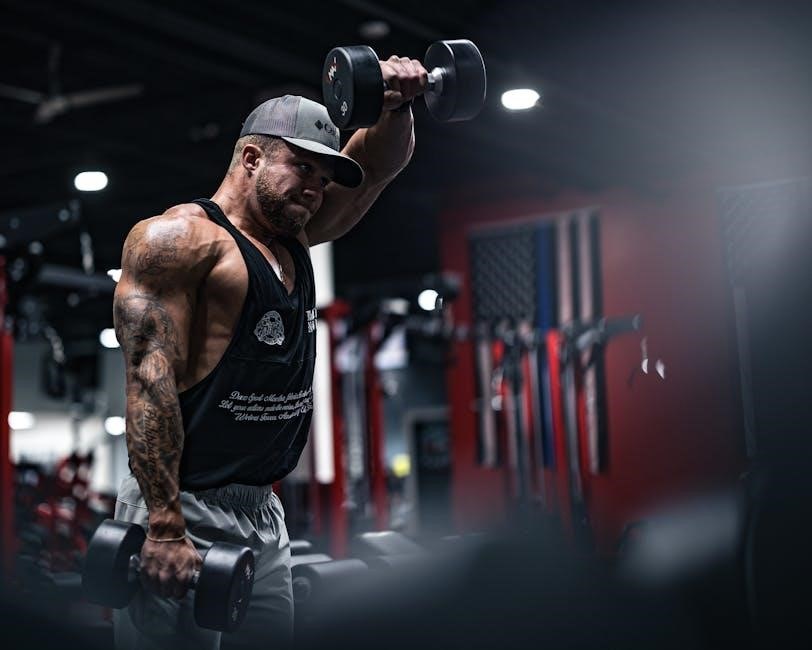
Creating a tailored shoulder workout plan involves selecting exercises like overhead presses and lateral raises. Determine workout frequency and intensity based on fitness goals. Track progress using a PDF guide and adjust routines to continue building muscle and improving strength. Maintain proper form and safety throughout the process.
5.1 Workout Frequency and Duration
Effective shoulder workout frequency is typically 2-3 times weekly for optimal muscle growth, depending on your fitness level.
Sessions should last 60-90 minutes, focusing on compound lifts and accessory exercises.
Beginners may need shorter durations, while advanced lifters can extend workout time for intensity.
Ensure balance between workload and recovery to avoid overtraining and support overall fitness goals.
5.2 Effective Programming Tips
Effective shoulder workouts require strategic planning.
Begin with a warm-up routine to activate shoulder muscles and prevent injury.
Incorporate compound lifts, such as overhead presses and pull-ups, to build strength and mass.
Use drop sets or supersets for advanced lifters to increase intensity.
Allow 48-72 hours of recovery between shoulder sessions.
Focus on full-body integration to enhance overall athletic performance while targeting shoulders.
Balance heavy lifting with lighter accessory exercises to promote muscle endurance.
Maintain proper form to maximize results and avoid injury risk.
Regularly track progress to adjust the workout plan as needed.
Incorporate nutrition strategies to support muscle growth and recovery.

Monitoring Progress in Shoulder Workouts
Effectively monitor your shoulder workout progress by tracking strength, size, and performance metrics. Take weekly progress photos and measure muscle growth. Track lifting weights and reps to gauge improvements. Adjust your workout intensity and volume based on progress to avoid plateaus and ensure continued development.
Stay consistent with your training, recovery, and nutrition to support long-term shoulder growth. Regularly assess your form and technique to prevent injuries and maximize results.
By monitoring your progress, you can fine-tune your workout plan and achieve your full shoulder development goals efficiently and safely.
6.1 Tracking Shoulder Workout Progress
Tracking shoulder workout progress is essential for achieving your goals. Use weekly photos and metrics like strength increases and muscle size to monitor improvements. Adjust your workout intensity and volume based on these metrics. Stay consistent with your nutrition and recovery routine. Tracking your progress helps you stay motivated and ensures steady shoulder development over time.
6.2 Adjusting Your Workout Plan
As you track your progress, adjust your shoulder workout plan to challenge your muscles and avoid plateaus. Gradually increase weights or resistance, vary exercises, or incorporate new techniques. Tailor your routine to your fitness level, goals, and recovery capacity. Ensure adequate rest and recovery to support muscle growth and prevent injuries. Adjust your workout plan based on feedback from your body and performance improvements.
Advanced Shoulder Workout Techniques
Advanced shoulder workout techniques involve combining compound exercises with accessory moves. These strategies allow scalability for varying fitness levels, promoting progression and adaptation. By focusing on precision and intensity, lifting, bodyweight, and resistance band methods target all shoulder heads effectively, driving strength, size, and definition.
7.1 Incorporating Weight Training
Weight training is essential for building shoulder power and strength. Focus on compound movements like overhead presses and shrugs. Add accessory exercises such as lateral raises and face pulls. Use dumbbells, barbells, and machines for variety. Adjust weights and reps to match your fitness level, ensuring proper form. This approach maximizes shoulder development while minimizing injury risk for both men and women.
7.2 Utilizing Resistance Bands
Resistance bands are a versatile tool for shoulder workouts, offering dynamic resistance to target muscles effectively. Incorporate exercises like lateral raises, front raises, and external rotations for balanced shoulder development. These bands provide adjustable resistance, making them suitable for all fitness levels—whether you’re a beginner or an advanced lifter. Their portability and ease of use make them an excellent complement to traditional weight training. Integrate resistance bands into your routine to enhance shoulder strength and flexibility without needing heavy equipment.

Shoulder Workout Safety and Recovery
Safety and recovery are crucial for shoulder workouts. Focus on proper form and alignment to prevent injuries. Allow adequate rest and recovery time between sessions. Prioritize hydration and nutrition to support muscle repair. Monitor signs of fatigue or overtraining and adjust your workout plan accordingly to maintain long-term shoulder health.
8.1 Preventing Shoulder Injuries
Preventing shoulder injuries is essential for safe and effective workouts. Focus on proper form and avoid overtraining, as it can strain the shoulders. Use appropriate equipment and gradually increase intensity. Always warm up thoroughly before exercising and incorporate mobility exercises. Be mindful of signs of fatigue or discomfort to avoid repetitive strain or long-term damage to the muscles and joints.
8.2 Proper Form and Technique
Proper form and technique are crucial for maximizing shoulder workout effectiveness and avoiding injuries. Focus on maintaining a neutral spine, engaging your core, and controlling the movement intentionally. Use a full range of motion, ensuring targeted muscles are activated instead of relying on momentum. Warm up thoroughly before starting and prioritize slow, deliberate lifts. Seek guidance if needed to ensure you’re performing exercises safely and efficiently for optimal results.
Full Shoulder Workout Routines for Different Fitness Levels
Our full shoulder workout PDF includes scalable routines for all fitness levels, targeting every shoulder muscle group. Whether you’re new to weight training or a seasoned lifter, these exercises ensure safe, effective progress tailored to your ability. Building lean, strong shoulders has never been more accessible or efficient.
9.1 Full Shoulder Workout for Beginners
This full shoulder workout PDF offers a structured routine for newcomers, focusing on foundational exercises like shoulder press, lateral raises, and rear delt flyes. Designed to promote safe progression, it emphasizes proper form and technique to build a strong shoulder base. Start with lighter weights, focus on controlled movements, and gradually increase intensity as you gain strength and confidence.
9.2 Full Shoulder Workout for Intermediate Lifters
For intermediate lifters, this full shoulder workout PDF emphasizes intensity and progression. Incorporate compound lifts like overhead press and upright rows with heavier weights. Accessory exercises such as face pulls and lateral raises target different muscle fibers. Focus on drop sets, tempo variations, and multi-angle movements to challenge advanced shoulders. Track progress by increasing weight or reps each session and maintain proper form to avoid injury.
The Role of Nutrition in Shoulder Workouts
Nutrition is vital for shoulder workout success. Consume adequate protein, healthy fats, and carbohydrates to fuel muscle growth. Hydration supports recovery, while electrolytes maintain performance. Track your intake to ensure optimal results and avoid overtraining. Proper nutrition complements your workout PDF, maximizing shoulder development.
10.1 Essential nutrients for Shoulder Growth
10.1 Essential nutrients for shoulder growth
Proper nutrition fuels shoulder workout success. Protein repairs and builds muscle, while healthy fats support hormone production for muscle growth. Carbohydrates provide energy for intense workouts, and hydration ensures optimal recovery. Electrolytes help maintain muscle function. Prioritizing these nutrients in your diet optimizes shoulder development and overall workout performance.
10.2 Meal Planning for Optimal Results
Meal planning plays a crucial role in achieving shoulder workout goals. Incorporate balanced meals rich in protein, carbohydrates, and healthy fats to fuel workouts and aid recovery. Focus on lean proteins like chicken, fish, and eggs, along with complex carbs such as oats and quinoa. Stay hydrated and aim for regular, nutrient-dense meals to maintain energy levels. Flexible meal prep ensures consistency, helping you make progress toward your shoulder growth objectives effectively.
Full Shoulder Workout PDF: A Comprehensive Guide
This PDF offers a detailed guide to building strong, balanced shoulders through targeted exercises, sets, and repetitions. It includes compound and accessory movements tailored for various fitness levels, ensuring progressive overload for shoulder development. Track your progress and optimize routines for maximum results.
11.1 Key Components of a Full Shoulder Workout PDF
This PDF includes a structured plan targeting all shoulder muscles, focusing on exercises like overhead presses, lateral raises, and face pulls. It outlines sets, reps, and progressions, emphasizing compound lifts for building strength and accessory movements for balanced development. The guide caters to all fitness levels, ensuring gradual overload and safe progression while tracking measurable results for success;
11.2 How to Use a Full Shoulder Workout PDF Effectively
To maximize your shoulder workout PDF, customize it according to your fitness level and goals. Adjust sets, reps, and intensity as needed. Follow proper form to prevent injuries and ensure muscle engagement. Track progress regularly, incorporating feedback to improve performance. Stay consistent, and modify the plan as your strength and endurance evolve for optimal results.

Common Mistakes in Shoulder Workouts
Avoid overtraining and neglecting warm-ups to prevent shoulder strain. Using improper form can lead to injuries.พลาดการฝึกแบบแต่เฉพาะกล้ามเนื้อยูเซอร์ใหญ่อาจทำให้ความสมดุลไม่ดี Use appropriate equipment to ensure effective and safe workouts.
12.1 Overtraining Shoulder Muscles
Overtraining shoulder muscles can lead to strain and impaired recovery. Always listen to your body and avoid overexertion. Focus on proper form to prevent injury. Incorporate rest days and avoid repetitive exercises. Moderate workout frequency to maintain muscle balance and functionality. Scaling back intensity can help prevent unnecessary stress and long-term damage.
12.2 Using Incorrect Equipment
Using incorrect equipment during shoulder workouts can lead to improper form and increased injury risk. Select tools that align with your exercise goals and fitness level. Avoid overreliance on heavy weights or unstable gear without proper guidance. Invest in equipment that supports shoulder mechanics, such as adjustable dumbbells or resistance bands, to ensure safe and effective training. Always prioritize quality and fit to maximize benefits and minimize misuse.

Full Shoulder Workout for Women
Full shoulder workouts for women focus on building lean, strong, and defined shoulders. This PDF guide offers adaptable routines for all fitness levels, emphasizing proper form and safety. It includes compound and accessory exercises tailored to goals, ensuring balanced muscle development and overall strength gains.
13.1 Tailoring Workouts for Women
Shoulder workouts for women require customization to maximize lean muscle growth while avoiding injury. Focus on proper form and gradual progression, adjusting weights and reps to individual needs. Incorporate compound exercises like overhead presses and lateral raises alongside accessory moves for balanced development. Prioritize controlled movements and full shoulder activation to achieve strong, defined shoulders tailored to women’s fitness goals.
13.2 Building Lean Shoulder Muscle
To build lean shoulder muscle, incorporate compound exercises like overhead presses and lateral raises. Focus on controlled movements to isolate the shoulders and avoid over-relying on other muscle groups. Pair these with accessory exercises targeting all shoulder heads for balanced development. Use resistance bands for added intensity and frequency. Ensure proper nutrition and adequate rest to maximize muscle growth while maintaining strength.

Full Shoulder Workout for Men
A well-rounded full shoulder workout PDF exclusively for men targets all three deltoid heads with key exercises like overhead press and lateral raises. It also includes tips for workout frequency, duration, and achieving balanced shoulder development for strength and aesthetics.
14.1 Maximizing Shoulder Development
Maximizing shoulder development for men requires a strategic approach to your full shoulder workout PDF. Focus on compound exercises like the overhead press and lateral raises, targeting all three deltoid heads. Aim for 3-4 sets of 8-12 reps, ensuring proper form to avoid injury. Incorporate both heavy lifts and accessory work for balanced growth. Rest periods of 60-90 seconds between sets help promote hypertrophy, ensuring your shoulder muscles recover and grow effectively.
Stick to a consistent routine, adjusting intensity and volume as needed to overcome plateaus. Always prioritize progressive overload by gradually increasing weight or reps to challenge your shoulders continuously.
With dedication to this structured approach, you’ll achieve maximal shoulder development, enhancing both strength and aesthetics.
14.2 Achieving Balanced Shoulders
Achieving balanced shoulder development involves targeting all three deltoid heads equally. Incorporate exercises such as lateral raises for the medial deltoid, front raises for the anterior deltoid, and reverse flys for the posterior deltoid. Aim for a balanced workout routine that prioritizes both compound and isolation exercises, ensuring each muscle group receives similar attention and avoids overtraining any single area. Progressively increasing weights while maintaining proper form will help enhance overall shoulder symmetry and strength.
Full Shoulder Workout Psychology
Full shoulder workouts require mental fortitude and consistency. A strong mindset drives sustained growth and strength. By setting clear goals and embracingplateaus as opportunities, individuals can achieve their shoulder potential through relentless dedication.
15.1 Staying Consistent with Shoulder Workouts
Consistency is key to achieving shoulder workout success. Avoid overtraining or neglecting your routine; instead, focus on regular, dedicated sessions. Maintain proper form and gradually increase intensity for steady progress. Ensure adequate rest and recovery to prevent injury and foster growth. Staying committed and patient will help you reach your shoulder strength and development goals effectively.
15.2 Overcoming Workout Plateaus
Plateaus in shoulder workouts are common but can be overcome with strategic adjustments. Increase weight, reps, or intensity gradually. Incorporate compound and accessory exercises to stimulate growth. Rest periods and recovery are crucial for muscle repair. Experiment with new exercises or angles to shock your shoulder muscles. Proper nutrition and hydration also play a vital role in achieving consistent strength gains and breaking through plateaus.
This comprehensive full shoulder workout PDF provides effective exercises and strategies for building strength and muscle. By following the guide, you can achieve your fitness goals while staying consistent and pushing past plateaus. Start your journey today and witness the transformative power of targeted shoulder training!
16.2 Encouragement to Start Your Full Shoulder Workout
Embarking on a full shoulder workout PDF journey is transformative. It’s not as complicated as you might think, and it’s suitable for everyone, regardless of fitness level. Start today to build strong, defined shoulders and unlock your full athletic potential. Your dedication will be rewarded with noticeable progress and a powerful physique.